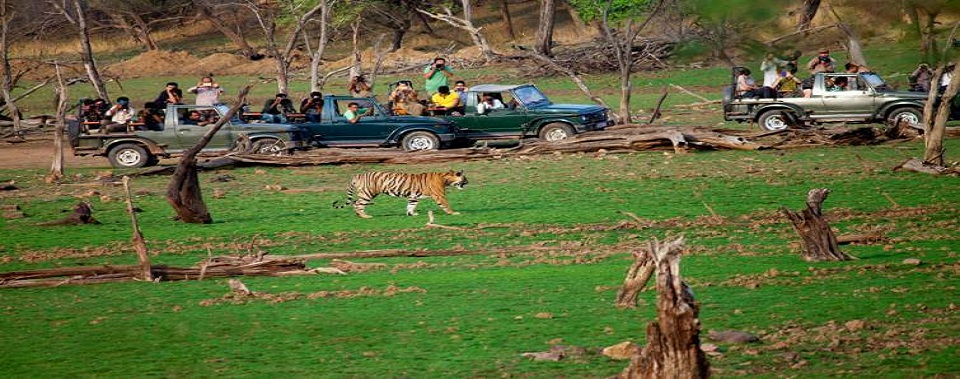
Monsoon Closure Alert for Ranthambore Wildlife Safari 2026
Ranthambore National Park is among the most popular wildlife destinations in India, especially known for its high chances of tiger sightings. The park features a mix of dry deciduous forests, open grasslands, and scenic water bodies that support a wide variety of wildlife. Adding to its charm is the historic Ranthambore Fort, which stands tall within the park and offers a unique backdrop to the safari experience. The national park is divided into multiple safari zones, each known for its own landscape and wildlife movement. Visitors can explore different zones to increase their chances of spotting tigers, along with other animals like leopards, sloth bears, and numerous bird species.
With the arrival of the monsoon season, Ranthambore National Park observes its annual closure from July to September. Heavy rainfall makes the forest tracks difficult to access and ensures a natural break for wildlife conservation and habitat regeneration. However, not all safari activities come to a complete halt. Some buffer zones remain open for limited tourism during this period. Zones such as Kundal, Chidikho, Balas, Kuwalji, and Aantri (Gates 6 to 10) continue to operate, offering visitors a chance to experience the forest in a quieter and greener setting, though tiger sightings may be less frequent compared to peak seasons.
Impact of Monsoon on Tiger Sightings
The monsoon season brings a major change to the forest environment of Ranthambore National Park. With consistent rainfall between July and September, the dry landscape transforms into a lush green habitat. While this makes the national park visually beautiful, it also directly affects tiger sightings. During summer, water sources are limited, so tigers are often seen near lakes and waterholes. But in the monsoon, water becomes available across the forest. This reduces the need for tigers to visit specific spots, making their movement more scattered and unpredictable.
Another important factor is dense vegetation. After rainfall, grass grows taller, and trees become thicker, which reduces visibility. Even if a tiger is nearby, spotting it becomes more difficult due to the heavy greenery. Safari movement is also limited in the monsoon. Many core zones remain closed due to muddy tracks and safety concerns. Even in buffer zones that remain open, vehicle access is restricted to certain routes, which reduces the overall chances of sightings.
Tiger activity patterns also change slightly. During the monsoon, tigers tend to stay within deeper forest areas where human access is minimal. This further lowers the probability of encounters. However, it is important to understand that sightings are not impossible. Some visitors still get lucky, especially in buffer zones. But overall, the monsoon season is not considered ideal if your main goal is tiger spotting.
Frequently Asked Questions
The core zones remain closed, but some buffer zones stay open for limited safari activities.
Tiger sightings are never guaranteed. Sightings are rare due to dense vegetation and scattered water sources.
Zones 6 to 10, including Kundal, Chidikho, Balas, Kuwalji, and Aantri, usually remain open.
It is not ideal for tiger sightings, but it is good for enjoying greenery and fewer crowds.
The Ranthambore National Park generally reopens in October, depending on weather conditions.
Yes, but only for open buffer zones and limited routes.
Summer months (April to June) offer the highest chances of sightings.
Yes, especially for landscapes, greenery, and birds, though tiger photography is less likely.